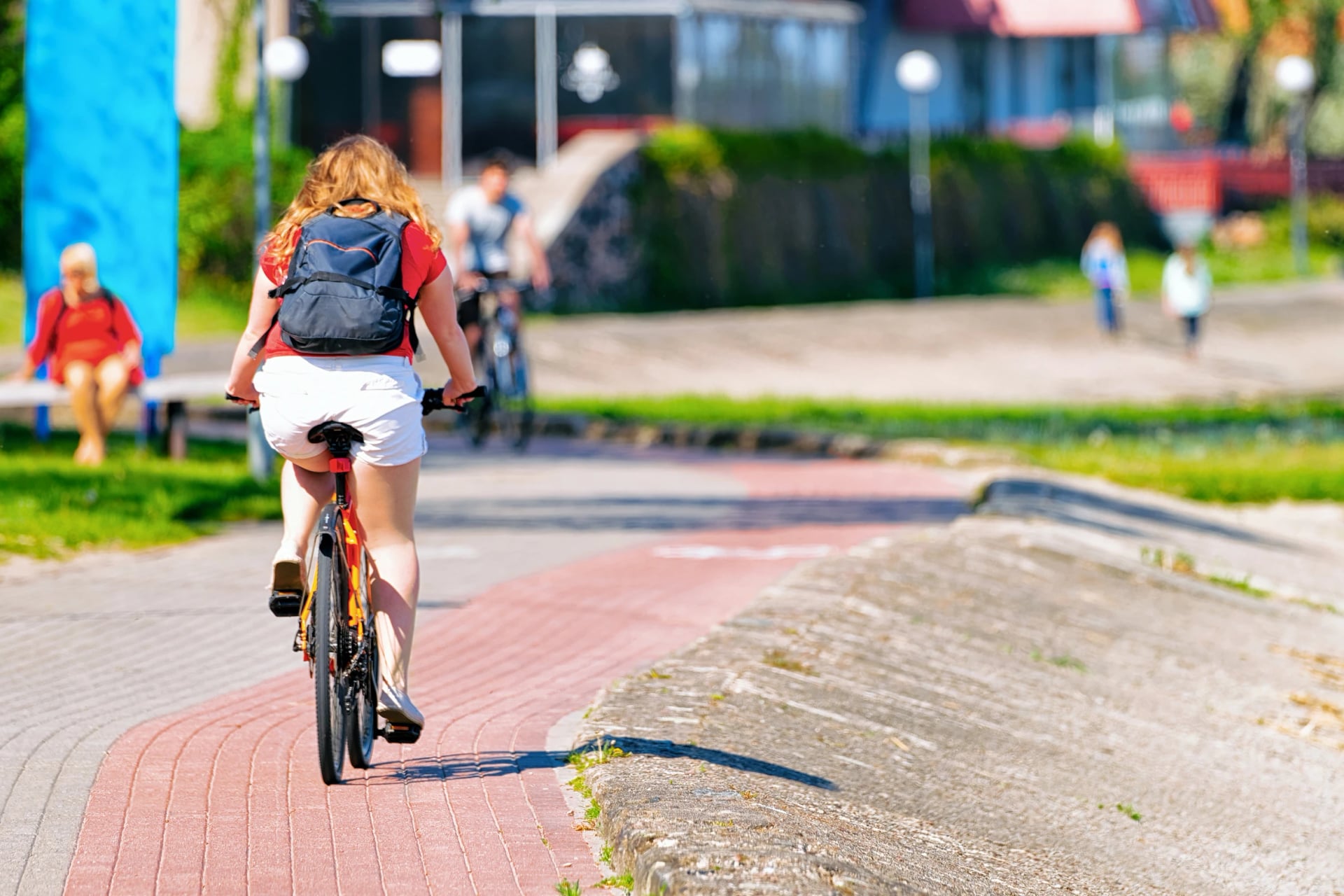
Cycling in Lithuania: The Best Routes in 6 Regions
Cycling in Lithuania by region: island castles near Vilnius, the Nemunas valley, the lagoon shore, the seaside path and the 98 km Curonian Spit.
Quick links
Don't want to read all this?
We've planned 800+ cycling trips. Send your dates, fitness and group size — we'll map the route and book every night.


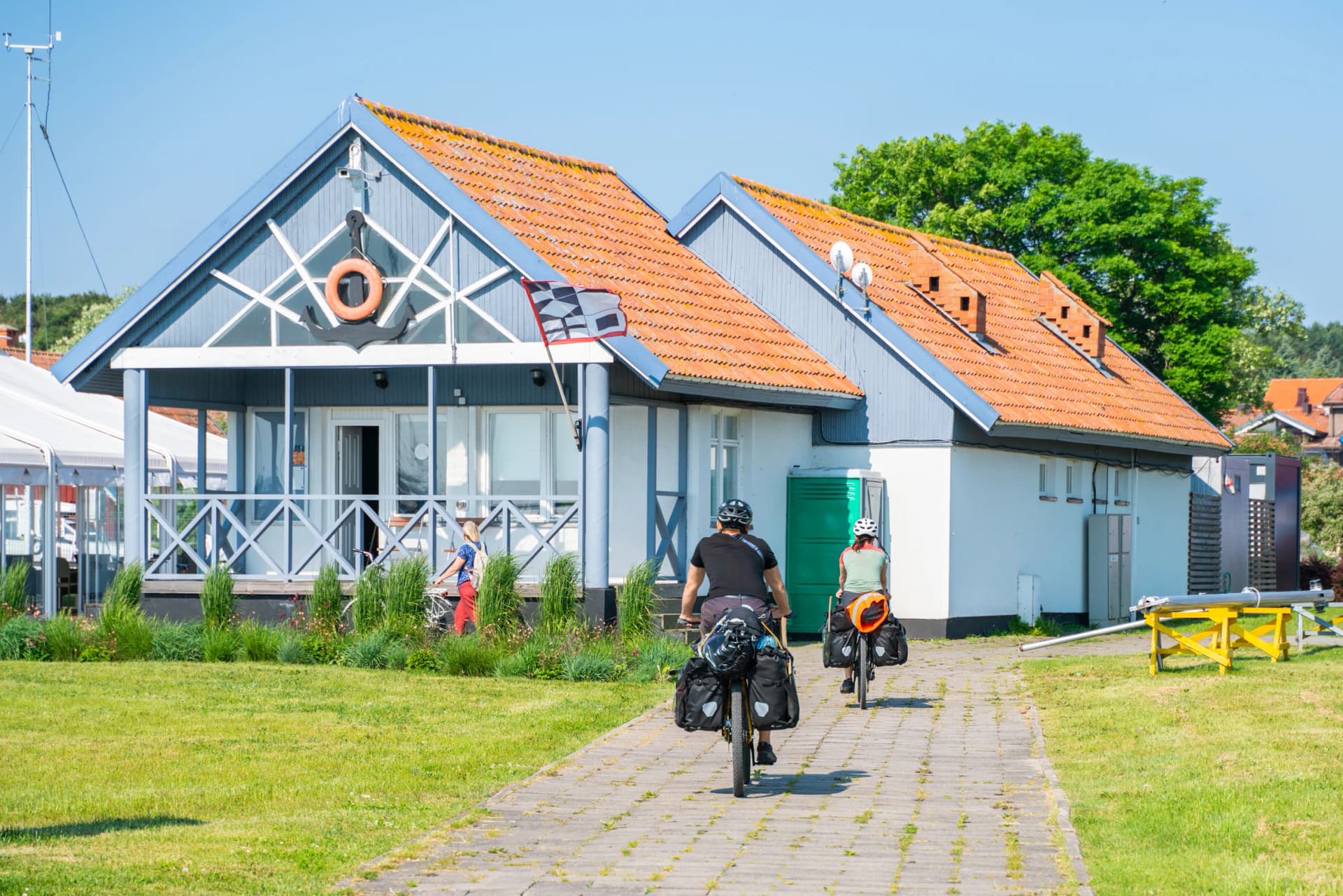
Cycling in Lithuania means pine forest, lake shores and long, empty beaches, with castles and wooden villages in between. The land is low and rolling, with no hill above 294 m, so a day's effort comes from distance and wind more than from climbs.
The country has 99 km of Baltic coast, three EuroVelo routes and five national parks. Its most famous ride follows the Curonian Spit, 98 km of pines and the highest drifting dunes in Europe. UNESCO listed the spit in 2000.
Biking in Lithuania falls into two kinds of trip. On the coast you follow cycle paths past beaches and lagoon villages. Inland you link castles, rivers and lakes on quiet roads, and in June the day lasts more than 17 hours.
Where to Cycle in Lithuania: Six Regions
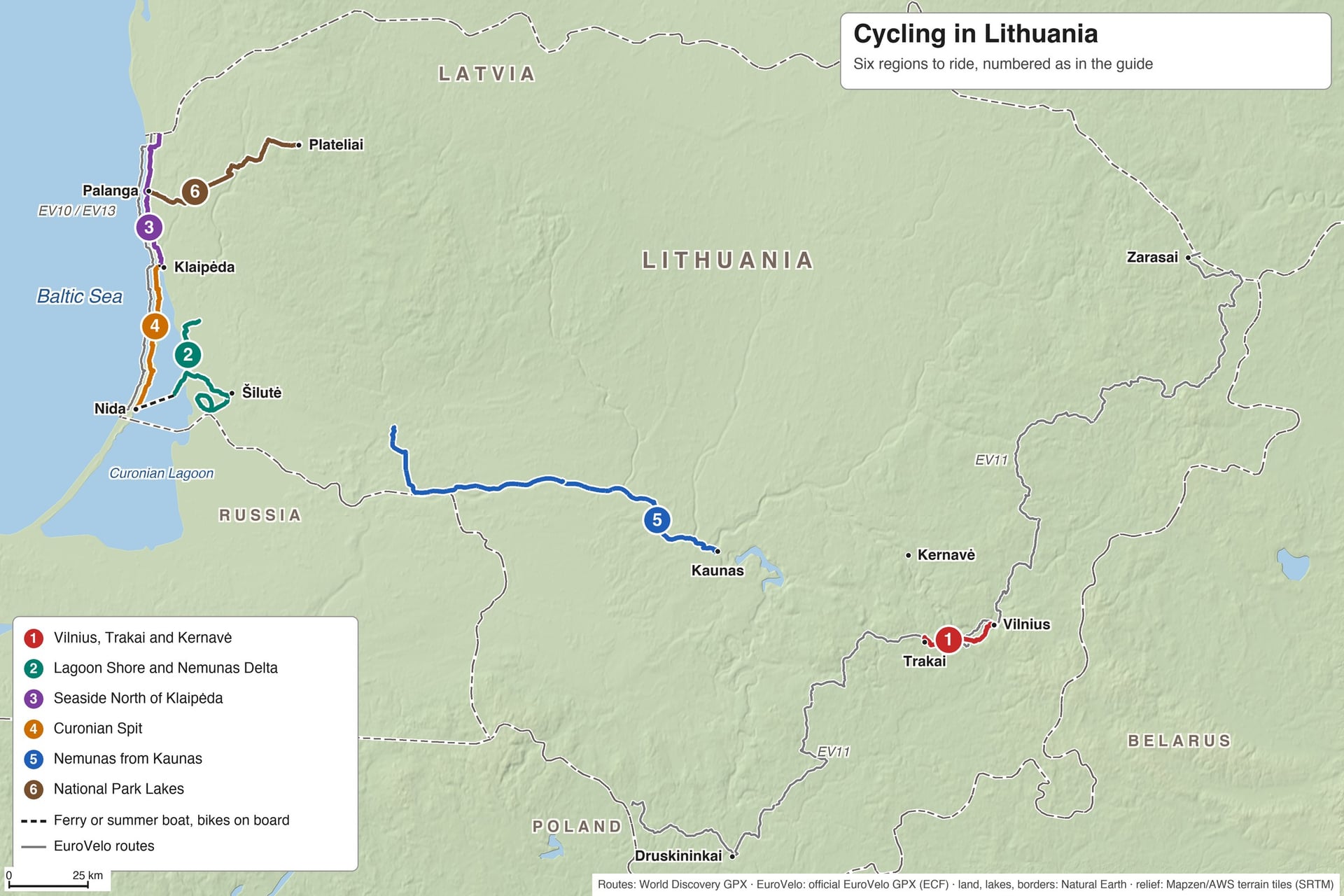
Most Lithuania cycling routes fall into six regions, from the capital in the east to the sea in the west. Each region has a signature ride, and the table gives its distance and who it suits.
Region | Signature ride | Best for |
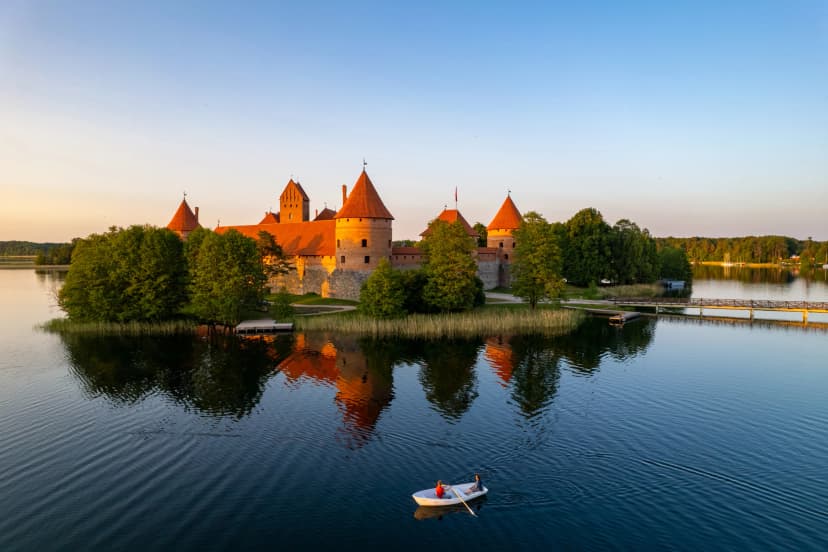
Vilnius, Trakai and Kernavė | The castle loop around Trakai's lakes, 28 km | Castles within reach of the capital |
Lagoon Shore and Nemunas Delta | Along the Curonian Lagoon, 95 km | Birds, wetlands and quiet lagoon villages |
Seaside North of Klaipėda | Klaipėda to Šventoji and back, about 80 km | Beaches on a path through the pines |
Curonian Spit | Smiltynė to Nida, about 50 km | Dunes, with sea and lagoon on either side |
Nemunas From Kaunas | Kaunas to Raudonė Castle, about 65 km | Castles on the high river bank |
National Park Lakes | Aukštaitija's lakes and watermills route, 47 km | Lakes and swimming stops |
Two official loops join regions. The 185 km Curonian Loop links the lagoon shore with the spit, and the 203 km West Lithuania loop turns inland from the coast to Lake Plateliai.
A week suits most riders, because it leaves time for Nida, Palanga or Vilnius off the bike, while crossing Lithuania by bike from Vilnius to the sea takes longer.
1. Vilnius, Trakai and Kernavė
Ride: day trips from the capital to the island castle at Trakai and the hill forts of Kernavė
Distance: the official Trakai loop is 28 km; Kernavė is 35 km from Vilnius, so about 70 km out and back
On the map: Vilnius to Trakai, 30 km
Ground: on the Trakai loop, roughly a third each of cycle path, street and gravel
Signs: few route signs inland, so the GPX track (the route file for your phone or bike computer) leads the way
Base: Vilnius
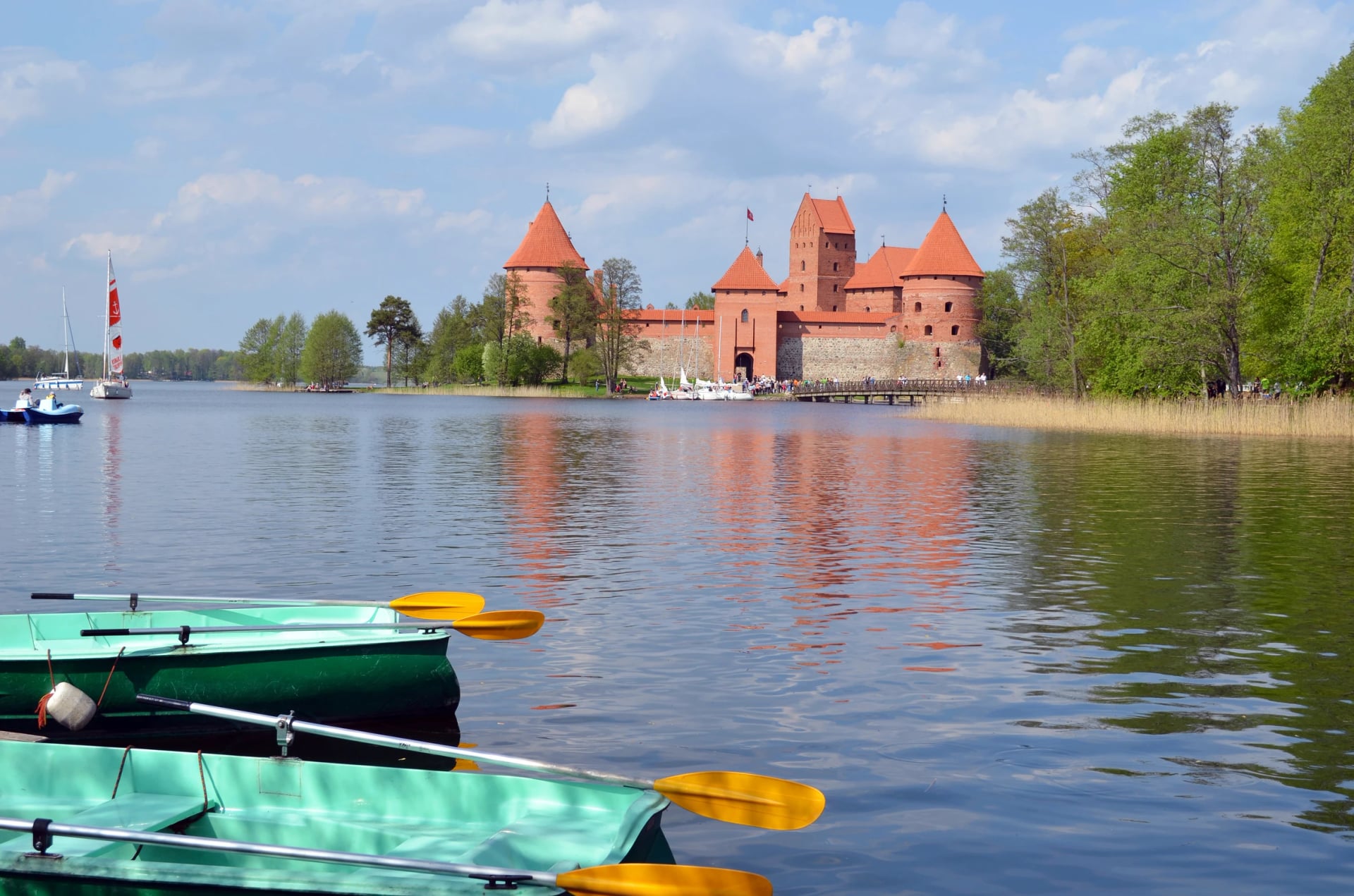
Vilnius Old Town has been on the UNESCO list since 1994, and you can ride out of it in a few minutes. EuroVelo 11 passes through the capital and on to Trakai. There, Lake Galvė and the island castle form the Trakai Historical National Park, protected since 1991.
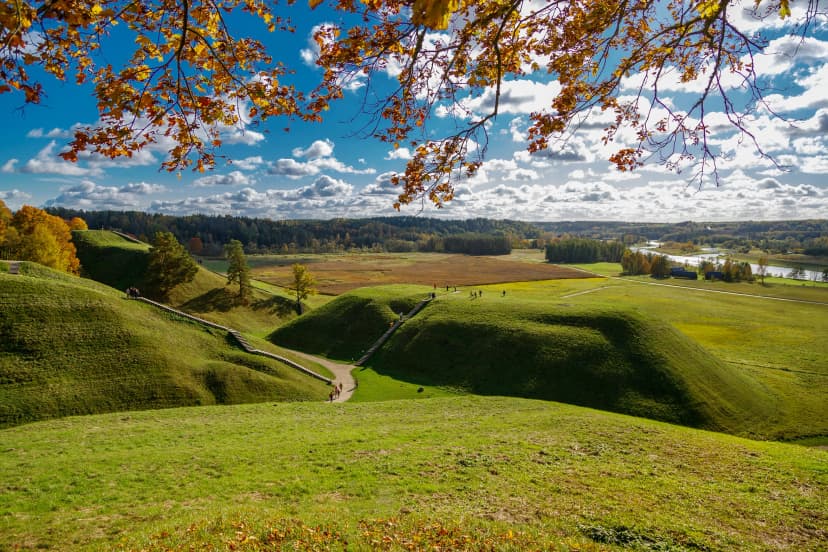
Kernavė lies north-west of Vilnius in the Neris valley, a full day out and back. Its grassy hill forts, a UNESCO site since 2004, look out over the river meadows.
2. The Lagoon Shore and the Nemunas Delta
Ride: the lagoon shore south of Klaipėda, the meadows of the Nemunas Delta and Ventė Cape
Distance: the official Curonian Loop is 185 km, about a week; the Along the Curonian Lagoon route is 95 km in 3 days
On the map: Priekulė to Šilutė (38 km), Šilutė to Rusnė (32 km) and Šilutė to Ventė Cape (25 km)
Ground: forest trails and gravel to Svencelė, then mostly asphalt to Ventė Cape, mixed again in the delta
Signs: follow the loop's markers where you see them, with the GPX track as backup
Base: Šilutė, then Nida
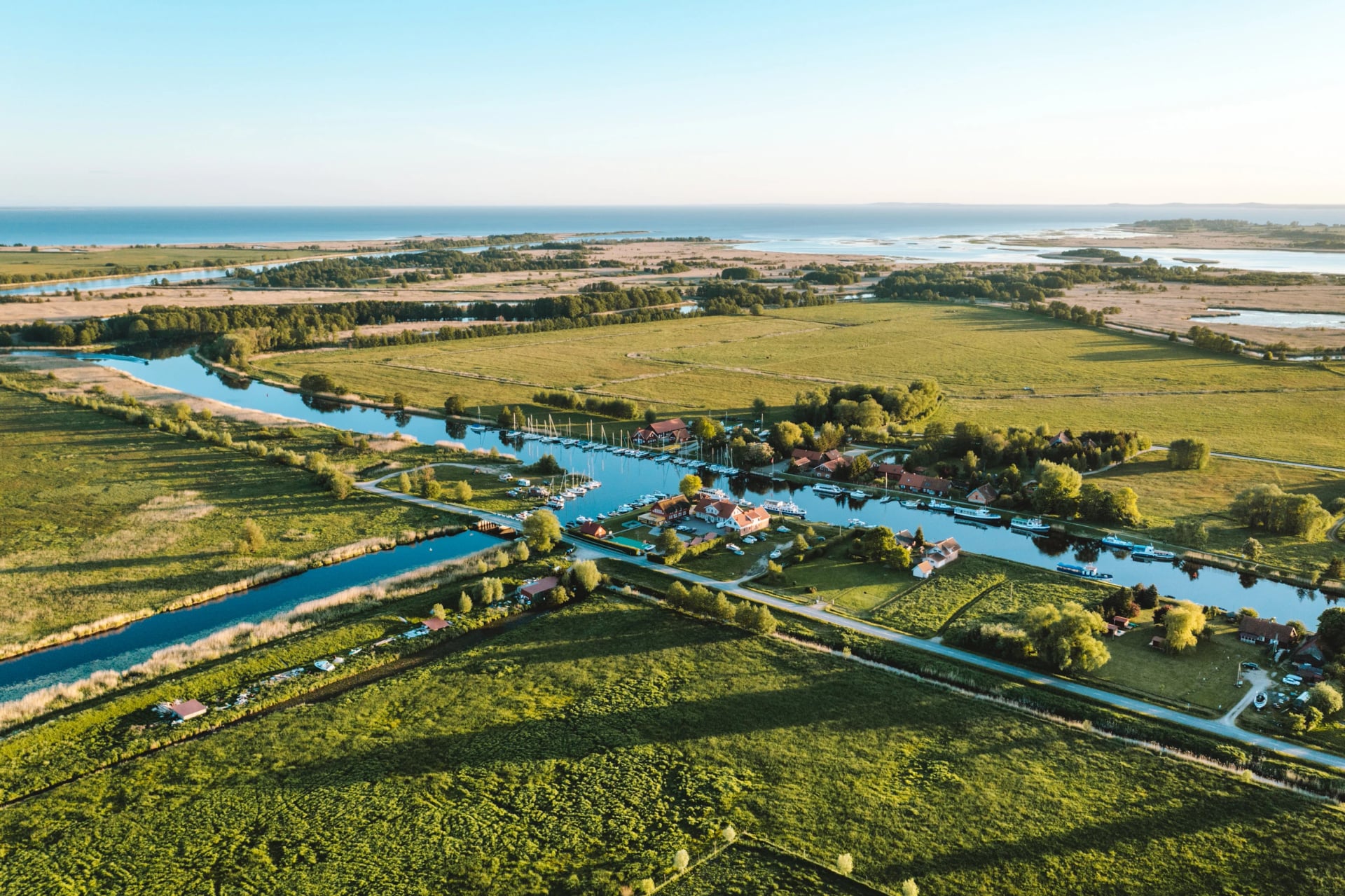
South of Klaipėda the land goes flat and wet. Past Priekulė you reach the lagoon at Dreverna, and the official route calls the forest trail on to Kintai its hardest part. Further south the Nemunas splits into its delta, a regional park of 29,013 hectares around the island town of Rusnė.
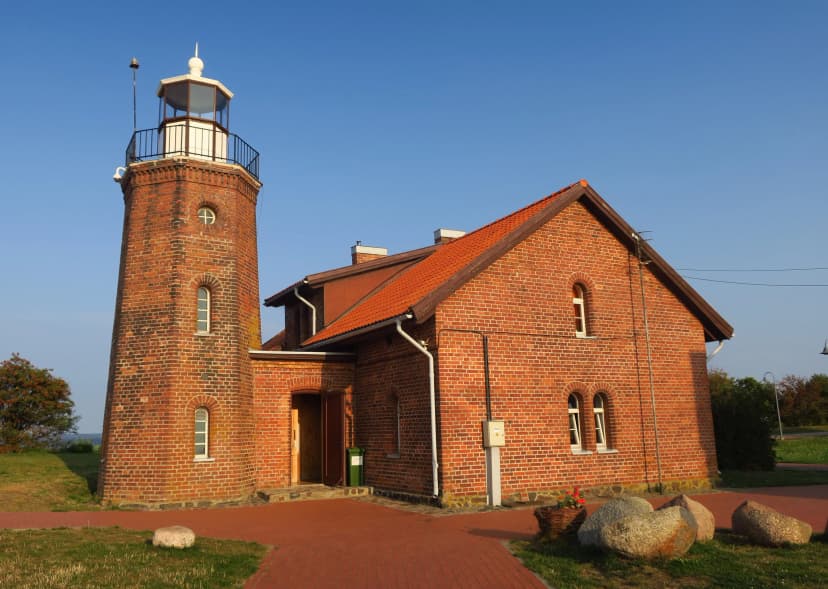
Ventė Cape, 25 km from Šilutė, has a bird-ringing station and an old lighthouse; a detour to the river village of Minija makes the day about 40 km. From the cape the Ventainė boat crosses to Nida in 80 minutes, but it sails only on set days, from 5 June to 28 August in 2027.
3. The Seaside North of Klaipėda
Ride: the coast path from Klaipėda through Palanga to Šventoji, then on to the Latvian border
Distance: 40 km of cycle path from Klaipėda to Šventoji, about 80 km there and back in 2 days
On the map: Klaipėda to Palanga (29 km) and Palanga to Būtingė (23 km)
Ground: asphalt path almost all the way, through pine forest behind the dunes
Signs: red national route 10 signs, which EuroVelo 10 and 13 follow
Base: Klaipėda or Palanga
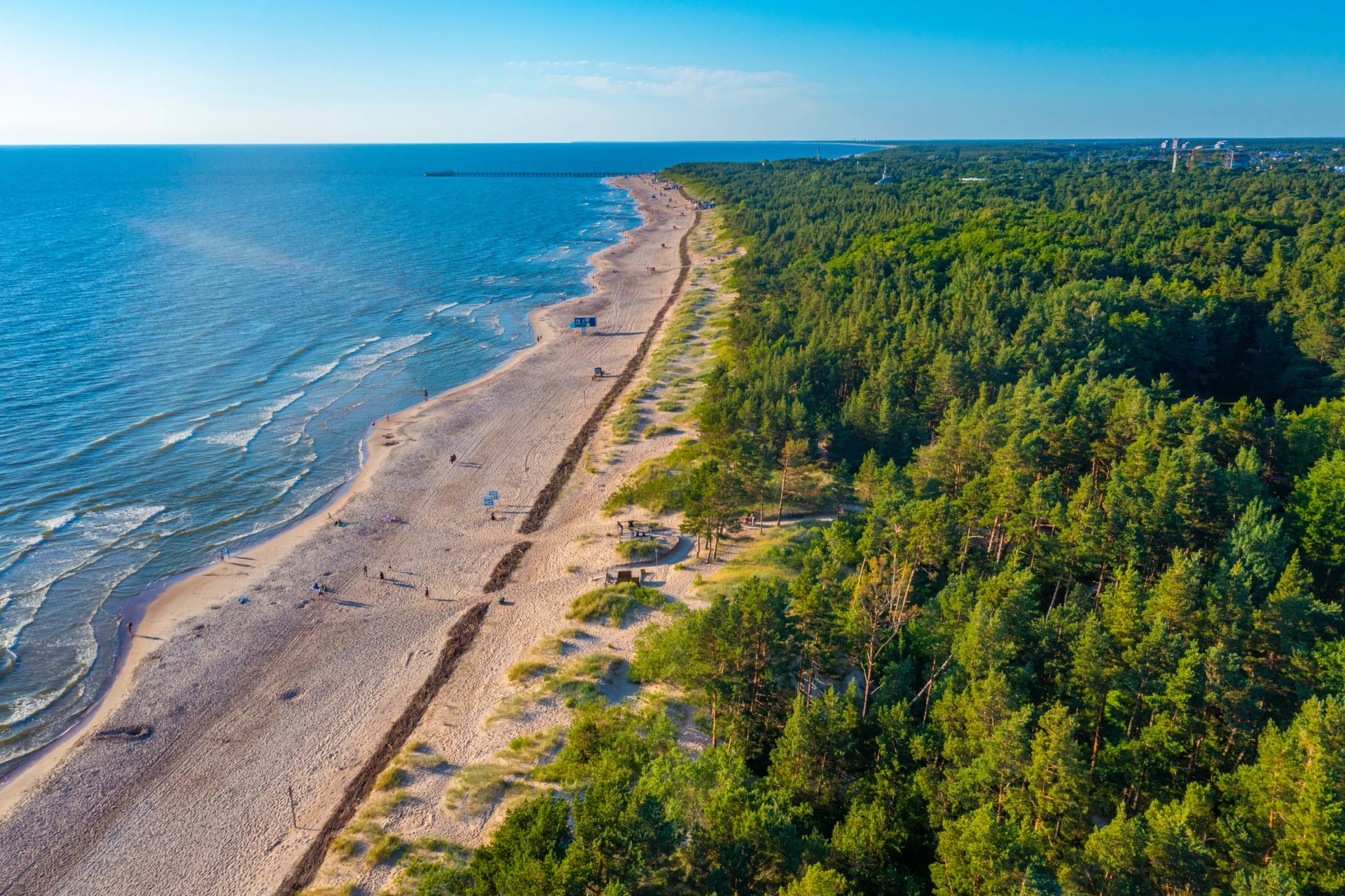
Lithuania's tourist board calls this the best cycle path in the country. It leaves the port city through the Giruliai forest and passes the clay cliff of Olandų Kepurė. Then it rolls into Palanga, a resort with a long pier and an amber museum in a palace of 1897.
North of Palanga the beaches get emptier, and a few kilometres past Šventoji the route crosses into Latvia at Būtingė. Further north the same coast leads on to the beaches and islands of cycling in Estonia.
4. The Curonian Spit
Ride: the cycle path through the pines from Smiltynė to Nida
Distance: 52 km from Smiltynė in 1 day, or 2 days with a night in Nida
Ground: asphalt, 2.5 to 3.5 m wide, rebuilt in 2024
Signs: EuroVelo 10 and 13 markers all the way to Nida
Base: Nida, or Klaipėda across the ferry
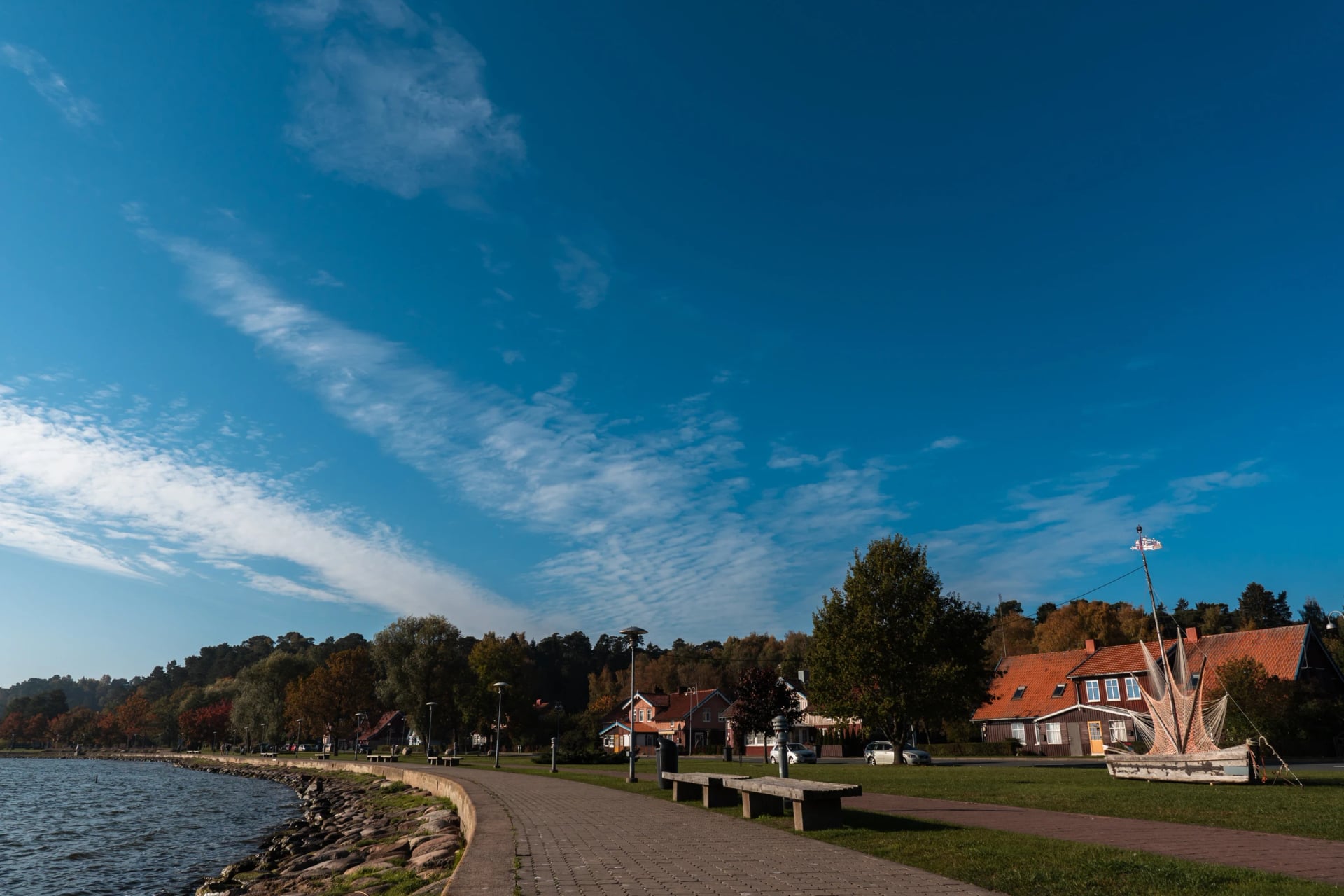
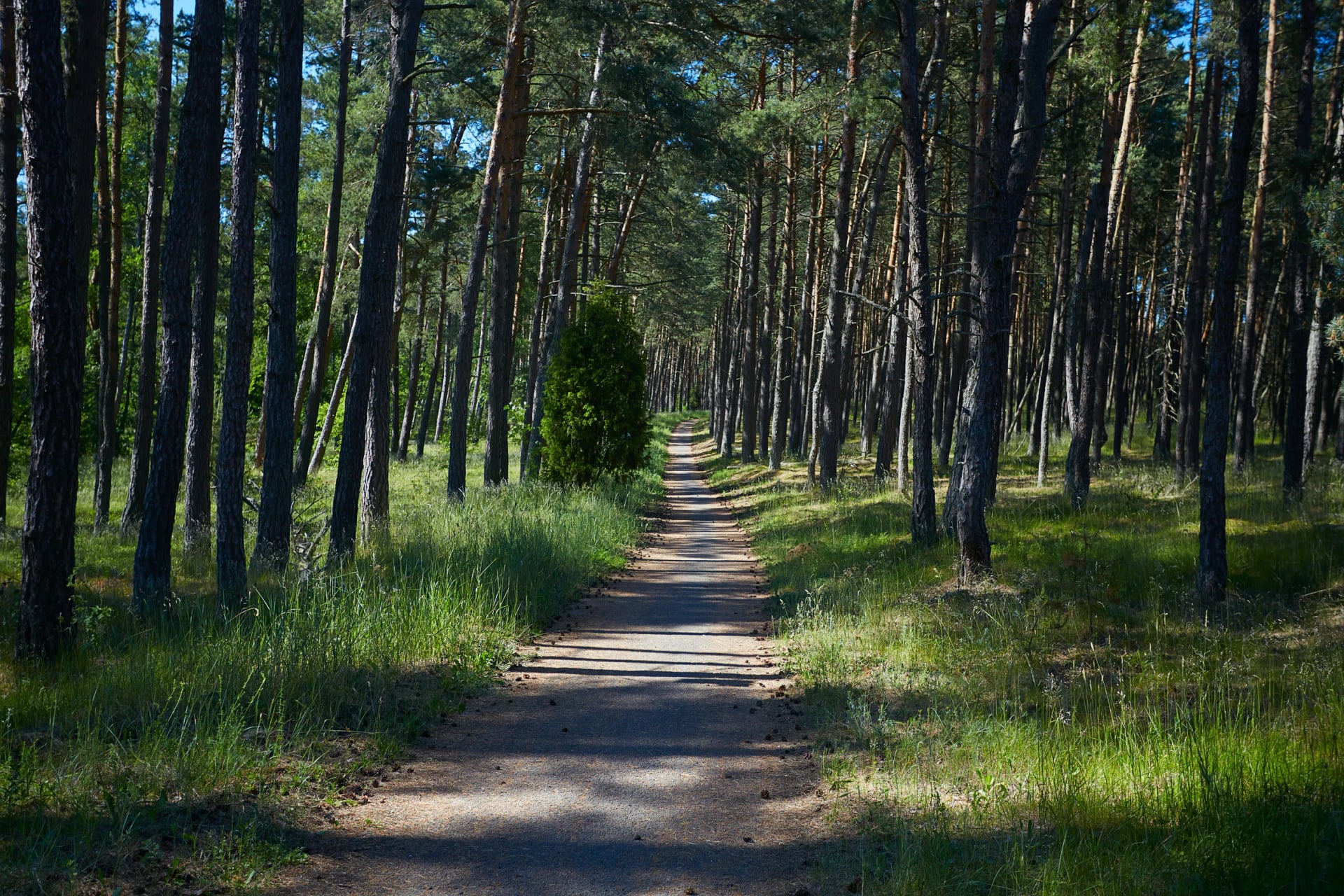
Curonian Spit cycling starts with a short ferry ride from Klaipėda to Smiltynė. From there the path runs south through the pines and past dunes up to 60 m high, and for most of its length it stays apart from traffic.
Halfway along, Juodkrantė has wooden fishermen's houses on the lagoon front. South of Nida the spit continues across a border that tours do not cross, and EuroVelo advises riders not to continue that way.
5. Down the Nemunas From Kaunas
Ride: the river road west from Kaunas, past the castles of the Nemunas valley
Distance: about 140 km from Kaunas to Tauragė in 2 days, with a night near Raudonė Castle
On the map: Kaunas to Raudonė (66 km) and Raudonė to Tauragė (76 km)
Ground: no single signed route follows the whole river, so the line joins quiet roads and short stretches of path
Signs: hardly any, so the GPX track is essential
Base: Kaunas, then Jurbarkas or another river town
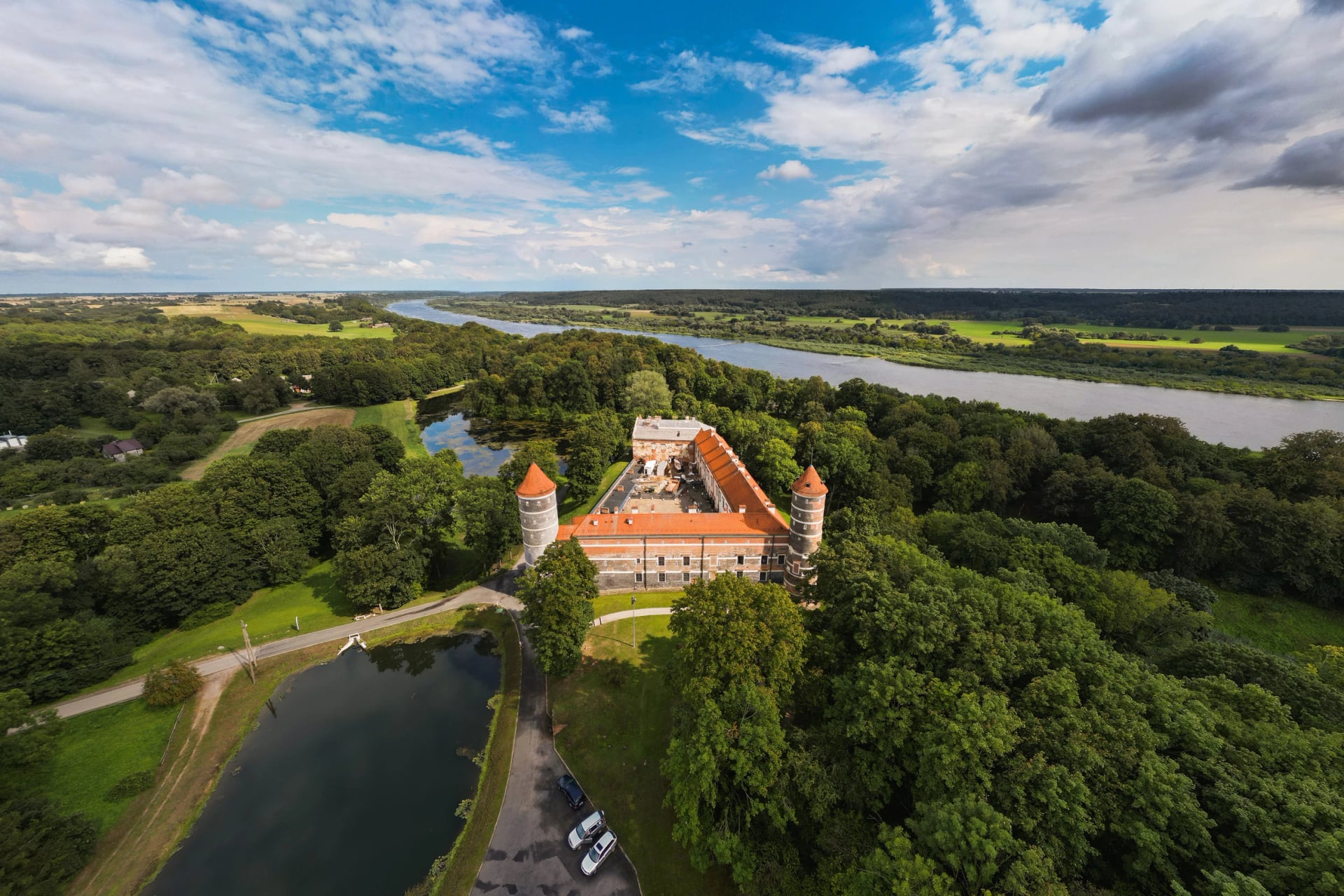
The Nemunas is Lithuania's longest river, and riding beside it carries you across the country towards the sea. Kaunas was the capital between the two world wars. From there the valley runs west past the castles of Raudonė and Panemunė on the high bank, a stretch the tourist board calls the Panemunė route.
Beyond Jurbarkas the Nemunas becomes the national border. Lower down, it spreads into the delta of region 2.
6. The National Park Lakes
Ride: lake loops in Žemaitija and Aukštaitija, and forest trails around Druskininkai in Dzūkija
Distance: 24 km around Lake Plateliai; the official Aukštaitija route is 47 km in 2 days
On the map: Palanga to Lake Plateliai, 65 km
Ground: the Aukštaitija route is about two-thirds road and one-third gravel
Signs: park trail markers in places, the GPX track for the rest
Base: Plateliai, Palūšė or Druskininkai
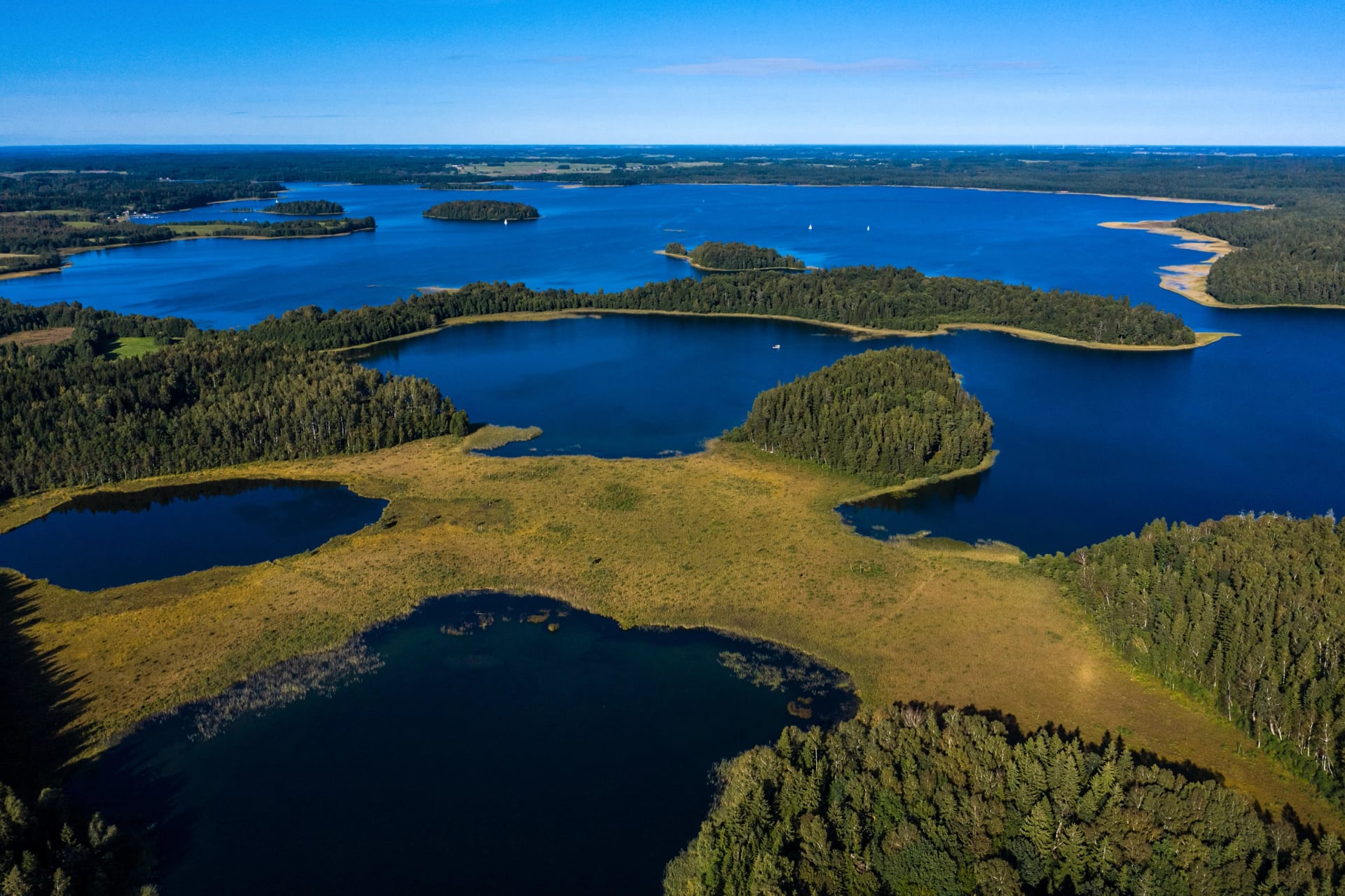
Beyond the Curonian Spit and Trakai, Lithuania has three more national parks, and each rides differently. Aukštaitija in the north-east, the oldest, dates from 1974 and holds 126 lakes. Its official bike route links the lakes with old watermills.
Dzūkija in the south protects the country's largest forest, and the spa town of Druskininkai beside it has cycle trails of 4 to 24 km. Žemaitija in the west is built around Lake Plateliai, where a former Soviet nuclear missile base at Plokštinė now holds a Cold War exposition.
How Hard Is Cycling in Lithuania?
Lithuania's highest point, Aukštojas Hill, reaches only 294 m. Headwinds and loose gravel cost more than any climb, and most riders settle at 40 to 60 km a day.
Terrain, Surfaces and Wind
The surface changes more often than the gradient. The Trakai loop is about one-third gravel, and the Aukštaitija lakes route 35%. The Curonian Loop has sandy forest trails on its way to Kintai.
On the coast the wind sets the pace. The paths beside the sea and along the spit have little shelter, so check the forecast each morning and plan the coast days around it.
EuroVelo Routes and Signs
Three EuroVelo routes cross Lithuania, and the one you ride decides how much of the navigating the signs do for you.
EuroVelo 10, the Baltic Sea Cycle Route: just over 100 km from the Latvian border at Būtingė through Palanga and Klaipėda, then down the Curonian Spit to Nida. North of Klaipėda it follows the red signs of national route 10, and from Klaipėda to Nida it has EuroVelo markers too.
EuroVelo 13, the Iron Curtain Trail: in Lithuania it shares the same path and signs as EuroVelo 10. Both stop at the border just south of Nida.
EuroVelo 11, the East Europe Route: about 470 km from Zarasai on the Latvian border through Ignalina, Vilnius, Trakai and Druskininkai to the Polish border. It has no signs yet, and long stretches follow quiet gravel roads.
Off the EuroVelo routes, inland signs are just as scarce. Official regional routes such as the 185 km Curonian Loop have markers in places. Along the Nemunas and in the lake country, the GPX track on your phone does the navigating.
The overview map of the six regions also shows all three EuroVelo routes, drawn as grey lines.
Road Rules
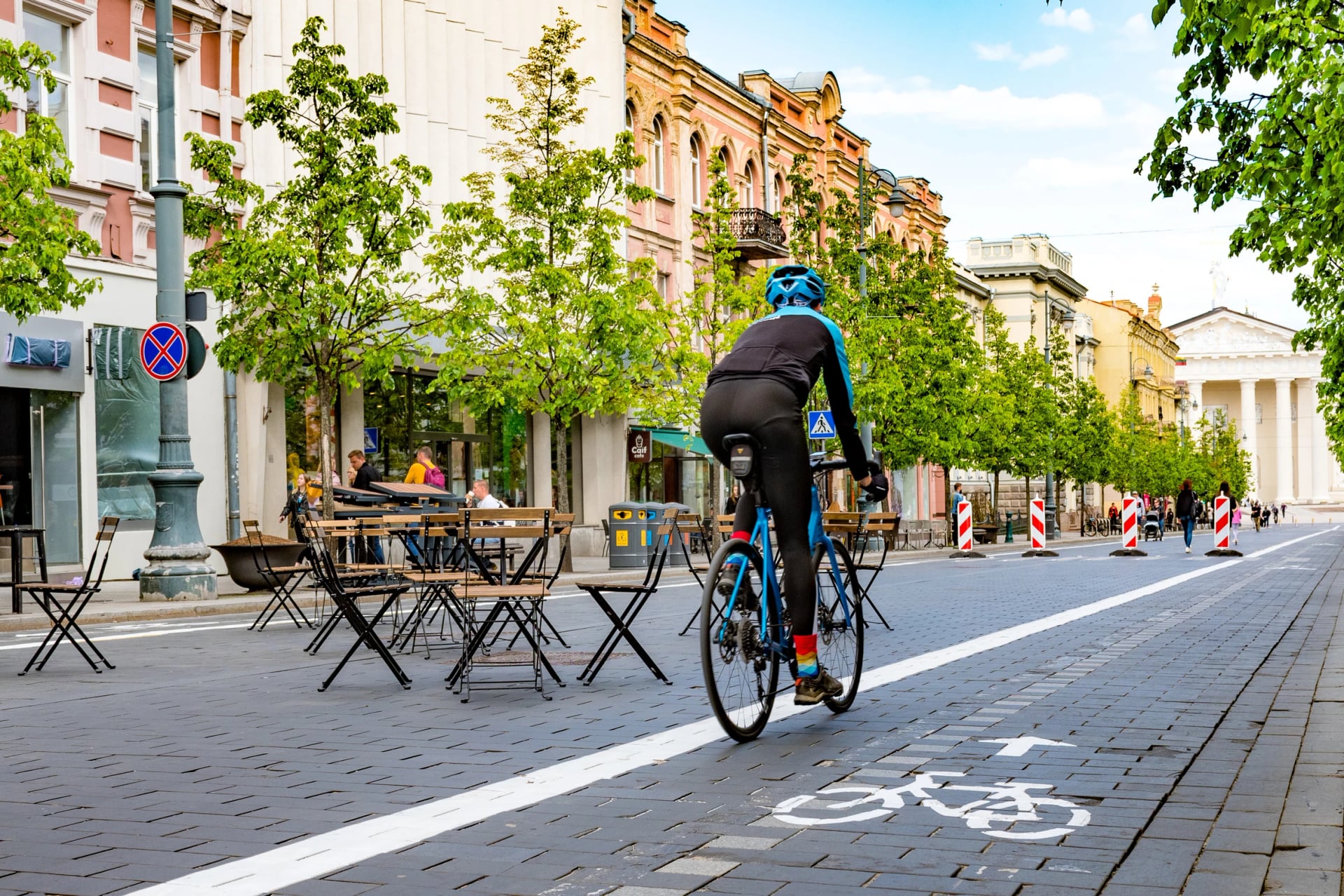
Lithuania's road rules for cyclists may differ from home in a few points. Where a cycle path runs beside the road, the law puts you on the path. Central Vilnius has marked bike lanes.
The other rules to know:
Helmets are compulsory under 18, and advised for adults.
Lights and a reflective vest are required after dark: a white light in front, a red one behind.
A reflective vest or lights are also required by day, in red, orange or yellow.
Pavement riding is allowed only without a usable path, and pedestrians come first.
Children ride alone on the road from 14, and from 8 with an adult.
Best Time to Cycle in Lithuania
May to September is the riding season in Lithuania. The coast is cooler than the inland in early summer and wetter in autumn. The month table puts Vilnius and Klaipėda side by side, with averages from Weather Atlas.
Month | Vilnius: day high, rain | Klaipėda: day high, rain |
May | 18 °C, 52 mm | 15 °C, 39 mm |
June | 21 °C, 73 mm | 18 °C, 56 mm |
July | 22 °C, 79 mm | 20 °C, 74 mm |
August | 22 °C, 76 mm | 20 °C, 83 mm |
September | 16 °C, 65 mm | 16 °C, 89 mm |
June is the best month for most riders: long light, fresher air on the coast and the lagoon boat running from 5 June in 2027.
July and August are warmest at the sea, and also the busiest in Palanga and Nida.
May and September bring cool, quiet roads; with no summer sailings to Nida, a lagoon trip rides the spit both ways.
Forest and lake regions bring mosquitoes in June and July, especially at dusk.
Holidays and Festivals That Fill the Coast
Public holidays and the Klaipėda Sea Festival bring crowds to the coast resorts and the port. If your dates fall on one of them, book beds on the coast early.
St John's Day on 24 June: Joninės, the midsummer night, is a public holiday, and the coast resorts fill up for it.
Statehood Day on 6 July: a public holiday marking the coronation of King Mindaugas in 1253.
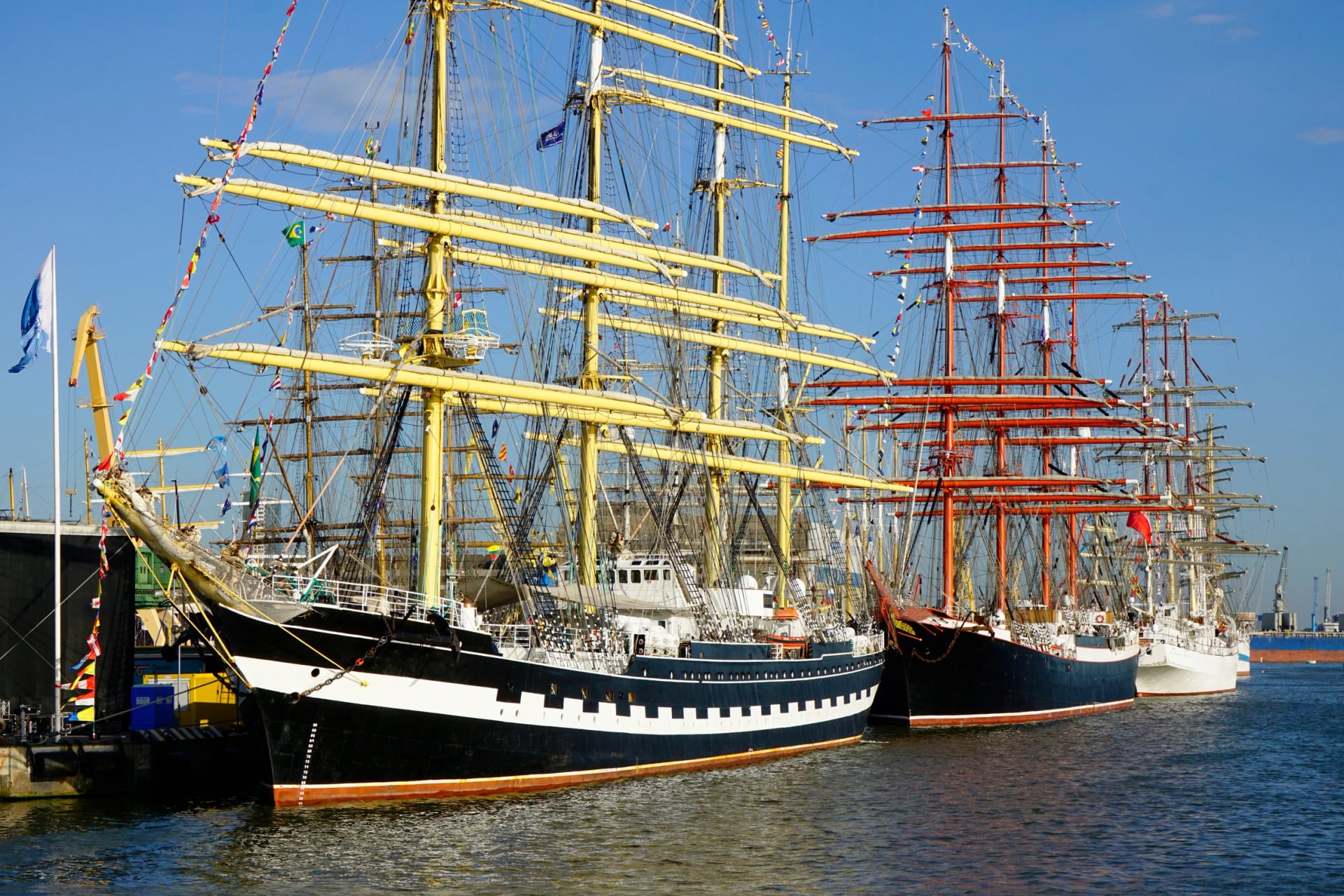
Klaipėda Sea Festival in late July: the port city's biggest summer weekend; the 2026 festival ran from 24 to 26 July.
Assumption Day on 15 August: the last summer public holiday, with busy beaches on the coast.
Know Before You Arrive
Lithuania is easy to reach by air or on an overnight ferry from Germany. Once you are there, trains and two ferries carry your bike.
Lithuanian food leans on potatoes, dairy and fish: cepelinai, the big potato dumplings, make a full lunch, and on a hot day šaltibarščiai, a cold pink beetroot soup, cools you down. Trakai is the place for kibinai, mutton pastries of the Karaim, and Nida for smoked fish by the lagoon.
Where to Sleep
Each region's base town sits in its facts list. Vilnius, Kaunas and Klaipėda give the widest choice of hotels and guesthouses, while the small river and lake bases, such as Jurbarkas, Plateliai and Palūšė, have fewer beds to choose from.
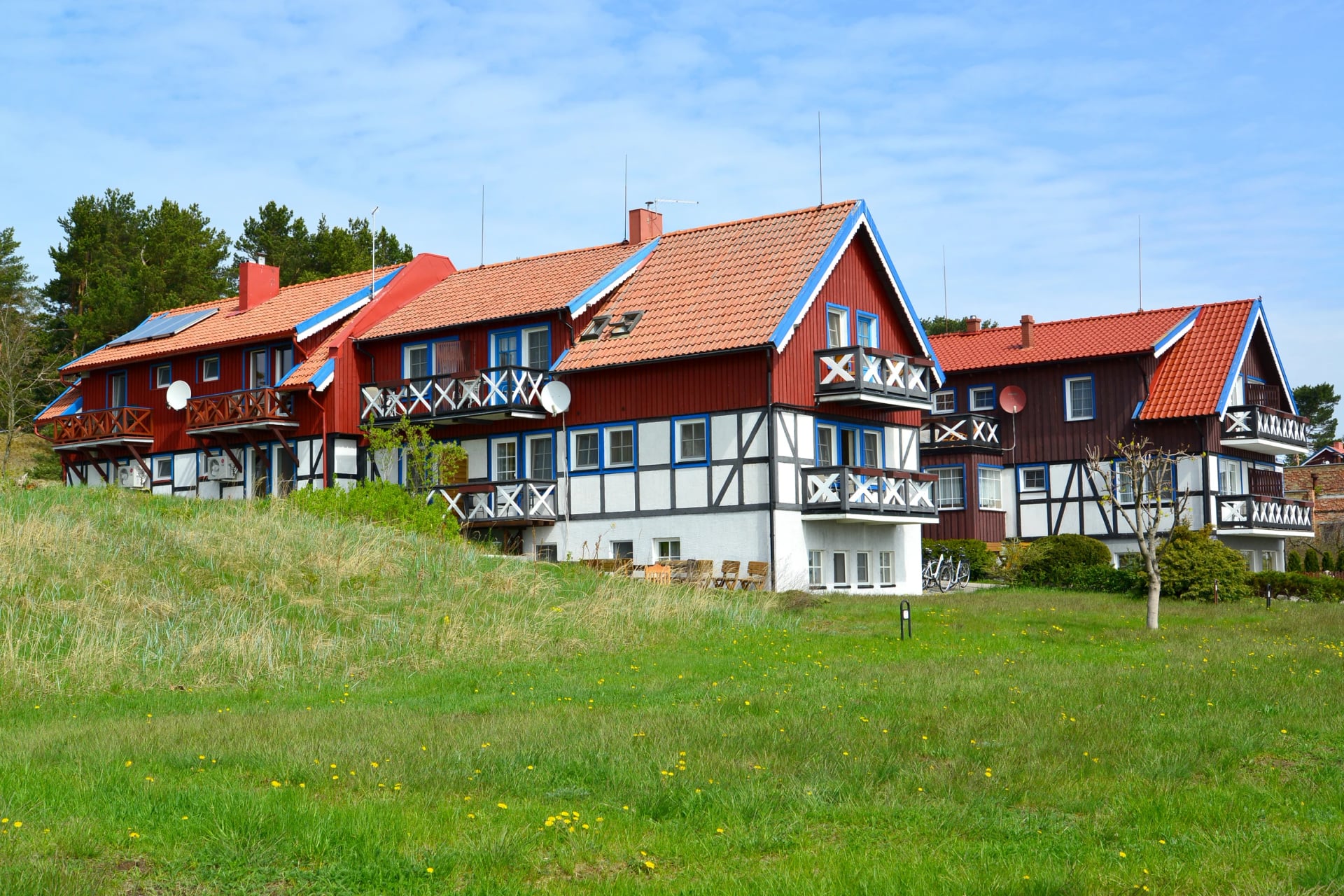
On the coast, Nida runs out of rooms before anywhere else, and every resort books out around Joninės on 24 June. Reserve those nights before the rest of the route.
Getting There
You can fly into Vilnius, Kaunas or Palanga, or sail in to Klaipėda. Where you land decides whether you start inland or on the coast.
By air: Lithuanian Airports runs three international airports, in Vilnius, Kaunas and Palanga; Palanga is the closest to the coast.
By ferry: DFDS sails overnight from Kiel in Germany to Klaipėda, a crossing of about 20 hours.
From Vilnius airport, a train reaches the main station in under 10 minutes. Direct trains from Vilnius to Klaipėda take around 4 hours, so one airport can serve both ends of a trip.
Getting Around With a Bike
Trains, a summer boat and a harbour ferry link the regions, and each sets its own rules for bikes on board.
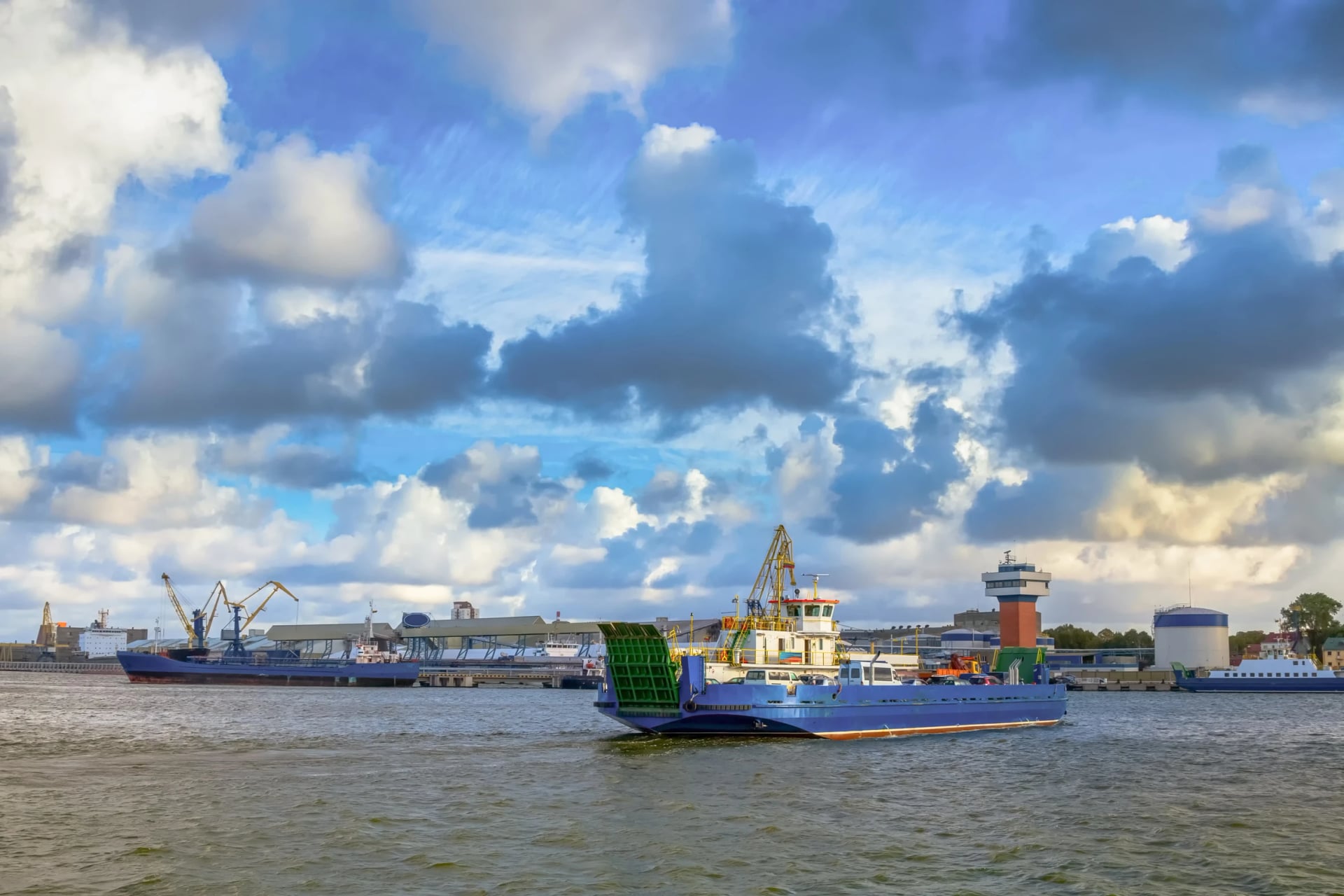
By train: LTG Link carries bikes in 2nd and 3rd class for an extra 45% of the fare, one bike per passenger, never in 1st class.
Across the lagoon: the Ventainė boat from Ventė Cape to Nida leaves at 17:00 and takes 80 minutes. Your bike rides for a small extra fare, and one bag up to 20 kg is free.
Booking the boat: the Šilutė tourist office advises booking two days ahead.
Across to the spit: the Smiltynė ferry carries riders and bikes from Klaipėda's Old Ferry Terminal. The bike rides free with a passenger ticket.
What to Pack
Lithuanian summers are mild and showery. July and August are Klaipėda's wettest riding months, and the sea wind cools the evenings fast. Start with a normal summer list, then add what Lithuania needs.
For any summer bike trip:
A waterproof jacket and a fleece, because the evenings by the sea turn cool
High-factor sun cream for 17-hour days, as the beach paths have little shade
A small lock for café stops and museum visits
For Lithuania:
Offline maps with your route loaded, as signs are scarce away from the coast
Insect repellent, for dusk by the lakes and forests in June and July
Swimwear for the beach stops, since the seaside path runs behind the dunes most of the way
Planning a Trip Across Lithuania
On a trip across the country, the riding is easy and the joins take the planning. No signed route follows the whole Nemunas. Trains take bikes only in 2nd and 3rd class, and the boat to Nida sails only on set summer days.
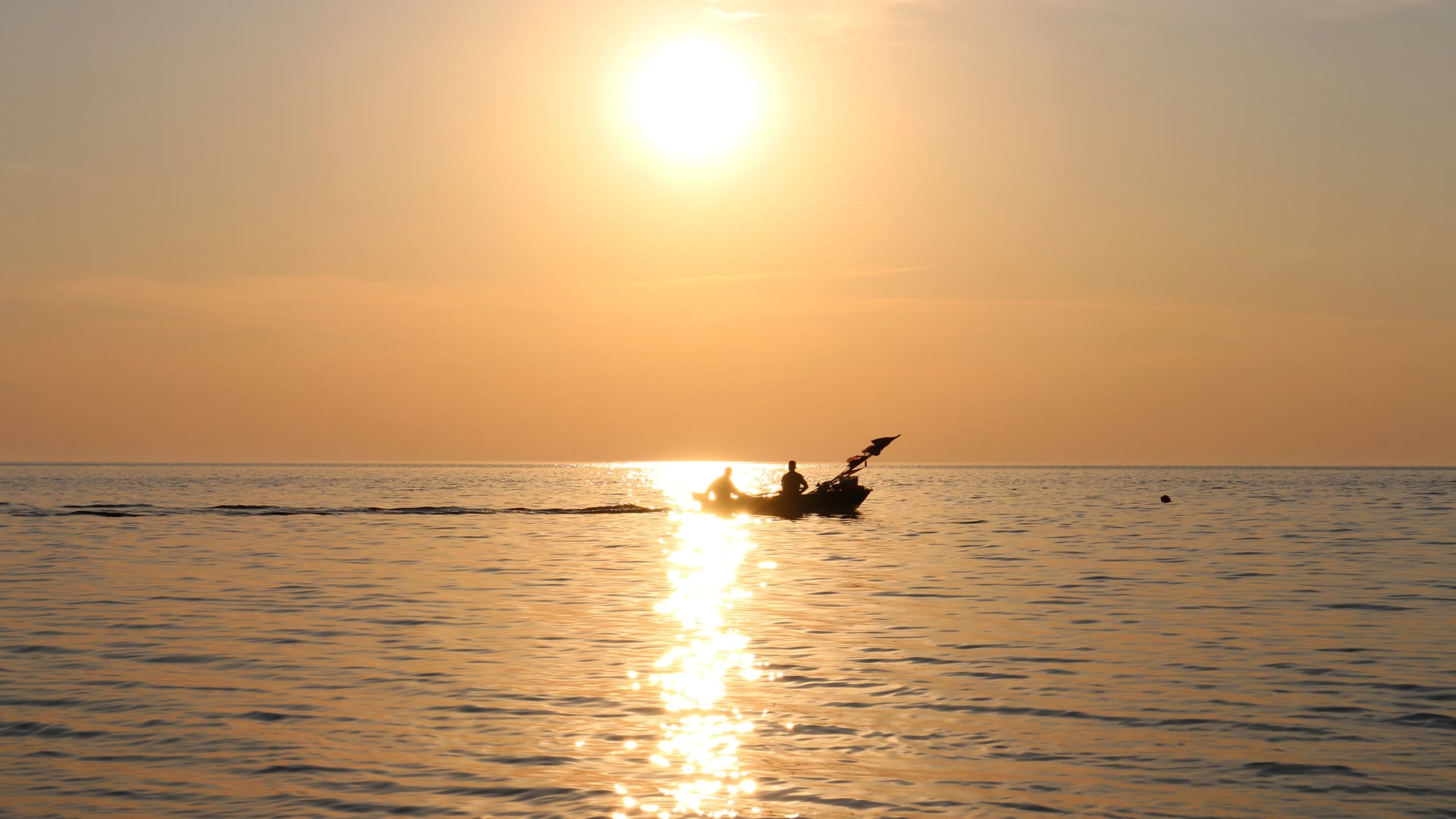
The boat day decides where you sleep before and after it, and Nida has few rooms, which fill first in June and July. A route that reaches Ventė Cape on a sailing day, with a bed waiting in Nida, holds the whole trip together.
Our Lithuania Bike Tour: Capital to Coast is planned around those joins.
Season: May to September
Route: Vilnius to Klaipėda via Trakai, Kaunas, the Nemunas castles, Ventė Cape and Nida, with daily rides of 25 to 76 km
Nights: 3- and 4-star hotels and guesthouses, with breakfast where your stay serves it
Included: a rental bike, a digital guidebook, GPS navigation in a route app and support from our team
For the coast alone, the Curonian Spit Cycling Holiday loops from Klaipėda to Nida and back, from June to August. Klaipėda to Riga via Kuldīga starts on the seaside path and rides on into Latvia.
Send your dates and the region you are drawn to through our trip inquiry form. All our trips in the country are on the Lithuania bike tours page.
From the Parnidis Dune above Nida you see the Baltic on one side and the lagoon on the other, and in late June the sun stays up until after 22:00.
Frequently Asked Questions



Plan with a cycling expert
Free advice from a team that knows these routes inside out - real people, not a bot

Hassle-Free
We take care of route planning, accommodations and all logistics, so you can focus purely on enjoying your ride.

Tried & Tested Adventures
Our cycling routes are hand-picked & tested, to ensure breathtaking landscapes, smooth roads, and maximum safety - giving you the perfect ride every day.

Unbeatable Support
Our 24/7 customer support is where we show our passion, ensuring your cycling holiday runs smoothly and your well-being is always our top priority.

Book with Confidence
We are a financially protected company, fully bonded and insured, keeping your money safe and allowing you to travel with confidence.